
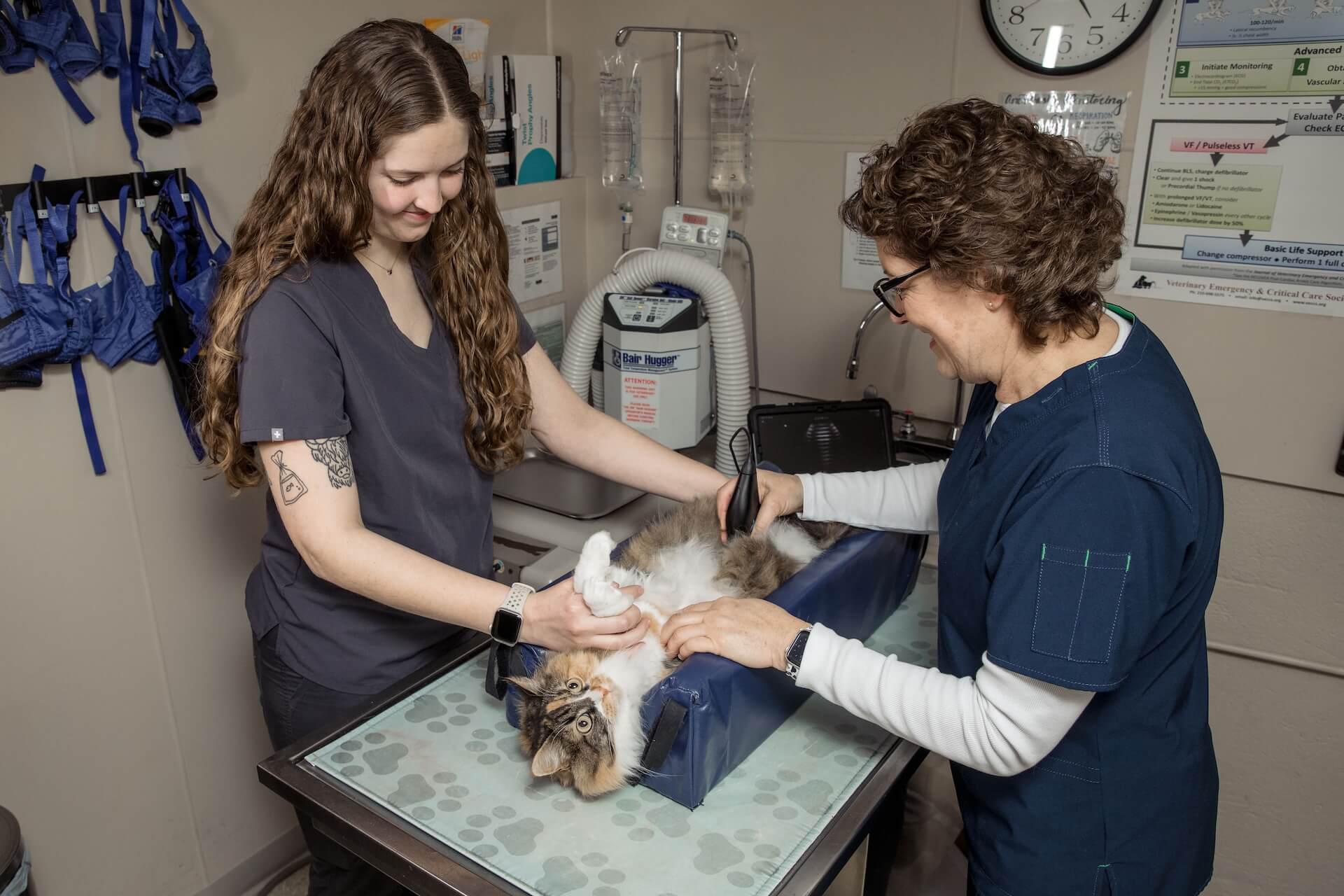
 Our pets can suffer from diabetes, low thyroid levels, chronic pain and congestive heart failure just like we can. At Valley Center Veterinary Clinic we seek to provide accurate diagnoses and prompt, effective treatments for your pets internal medicine needs.
As your primary care veterinarian, we handle the large majority of internal medicine concerns right here, from the first blood test to long-term management.
What kinds of conditions do you manage?
We routinely diagnose and treat things like urinary tract infections, early kidney or liver changes, thyroid imbalances, diabetes, gastrointestinal upset, and general "something seems off" symptoms such as low energy, weight loss, or changes in appetite or thirst.
How do you decide what testing my pet needs first?
We start with your pet's history and a physical exam, then choose the least invasive tests that will give us the most useful information — usually bloodwork, urinalysis, or fecal testing. We build from there based on what those results show, rather than running every test at once.
Why is bloodwork necessary to tell me what’s wrong?
Symptoms like vomiting, fatigue, or weight loss can point to many different conditions. Bloodwork lets us look directly at organ function and blood cell counts, which narrows things down quickly and helps us avoid guessing. It's often the fastest path to an accurate answer, not an extra step.
Why does my pet need recheck appointments if they seem fine?
With internal conditions, "seeming fine" and "actually stable" aren't always the same thing. Rechecks let us confirm treatment is working at the level we can't see from the outside — through follow-up bloodwork or physical exams — and catch small issues before they become bigger ones.
How much should I expect to spend on diagnostics?
It depends on your pet's symptoms and which tests are needed, but we'll always walk you through recommended testing and approximate costs before moving forward, so there are no surprises. We're happy to talk through payment options if cost is a concern.
What can I do at home to help?
Keeping a simple log of appetite, water intake, energy level, and any symptoms (along with when they happen) is one of the most helpful things you can do. It gives us real information to work with at each visit and often speeds up diagnosis. Also giving medication on time as prescribed is the most effective way to see fast results.